
Finding Residents Across Houma Records
No official roll lists every person in Houma. The records that exist were built for separate public tasks, so each one answers a narrow question. The Terrebonne Parish Assessor ties an assessed owner to a parcel. The Registrar of Voters checks registration through personal fields. The Clerk of Court indexes people named in deeds, successions, marriages, and court matters. A printed city directory fixes a name to the exact wording and date of its entry. Every result describes a role, not a whole life.
Let what you already know pick the first source. An exact street address belongs in the property search. A full name with basic personal details fits the voter portal. An old address or a relative points to the library collection. Write down dates and identifiers before moving on. That habit keeps a current owner, a mailing recipient, a voter, a court party, and a past householder from blurring into one person in your resident lookup.
- Search the Terrebonne Parish Assessor by property address, parcel number, or owner name.
- Check a registration through the Louisiana Voter Portal only with the required identifying fields.
- Use the Clerk index or the courthouse counter for deeds, cases, marriages, wills, and successions.
- Ask the Terrebonne Parish Library genealogy room for the relevant directory, obituary index, census extract, or yearbook.
- When no public search exists, send a narrow request through TPCG Public Records.
Houma Records Desks and Custodians
Houma is the parish seat, so the resident rolls that matter most sit with Terrebonne Parish offices. The Clerk records legal instruments and keeps the court paths. The Assessor publishes parcel assessment data for every property. The Registrar maintains voter records under Louisiana election law. Their counters matter just as much as their portals. The Clerk's main online system sits behind a subscription, and older books or records outside the certified online ranges may need an office search, a copy order, mail, phone, or a visit in person.
The keeper of a record is always the right place to correct or certify it. For full address work, the Houma street directory workflow separates parcel ownership from signs of residence.
Houma Parcels as a First Match
The Assessor is often the fastest free starting point. Its search accepts several forms of the same place. One result can show the physical situs address and the owner's mailing address. The same page lists the parcel number, legal description, assessed values, homestead status, and deed references printed with the assessment. Remember that assessment data is not conclusive title. When a transfer matters, confirm it in the recorded act itself. The recorder and assessor together close that loop for any Houma parcel.
| Search mode | Best use |
|---|---|
| Parcel number | Reopen one exact assessment record |
| Name | Find parcels assessed to a named owner |
| Property address | Tie a physical place to its parcel |
| Section, township, range | Work from land description |
| Subdivision or legal description | Resolve a lot when street wording changed |
The Assessor search screen shows the official starting fields used in the Houma residents directory process.
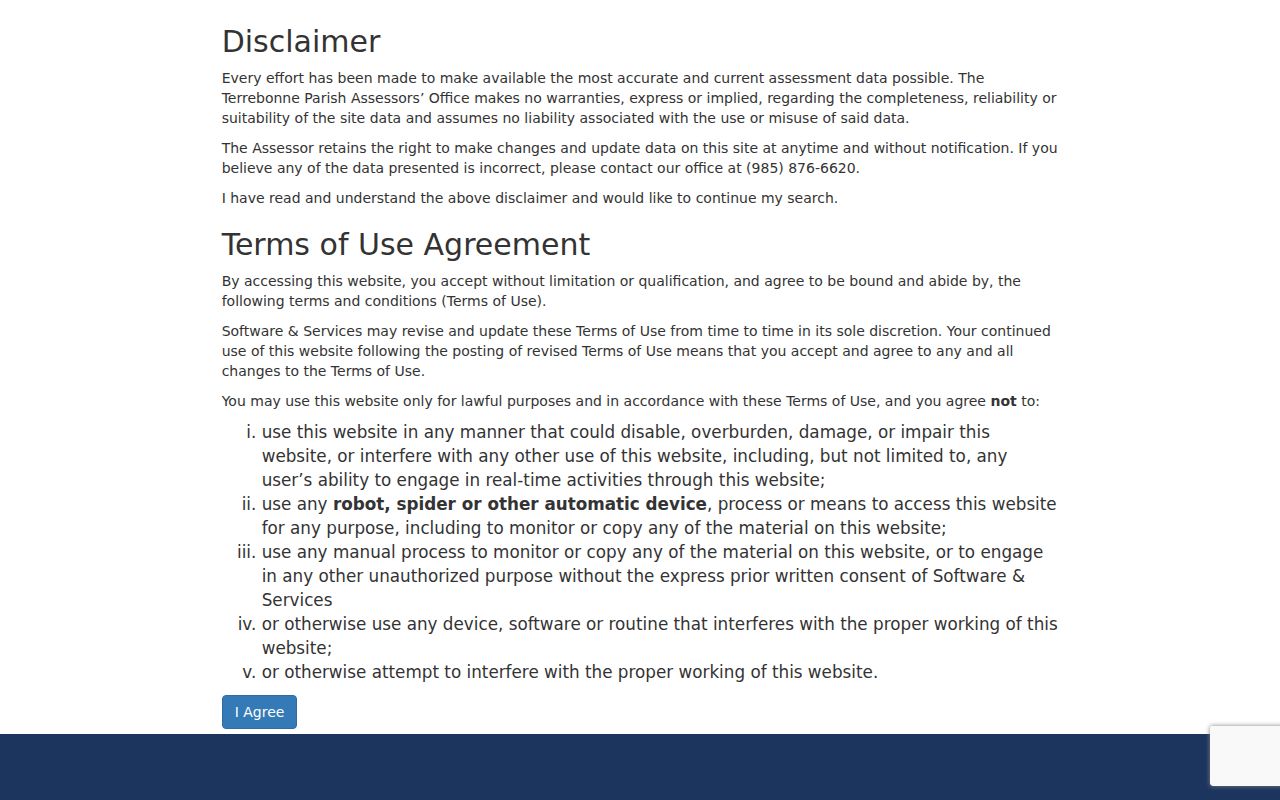
The screen offers several routes to the same parcel. That helps when a name is misspelled or an address was typed in another form.
Houma Voter Details Stay Narrow
The state voter lookup is not a browseable resident roster. A name search asks for first name, last name, ZIP Code, and birth month and year. Its address mode wants the ZIP, street address, an optional apartment or lot, and the city. Louisiana R.S. 18:154 restricts sensitive fields and the commercial circulation of voter data. Registration can support an identity match. It cannot prove who occupies a home today. The official voter login is the direct check for anyone who supplies the required facts.
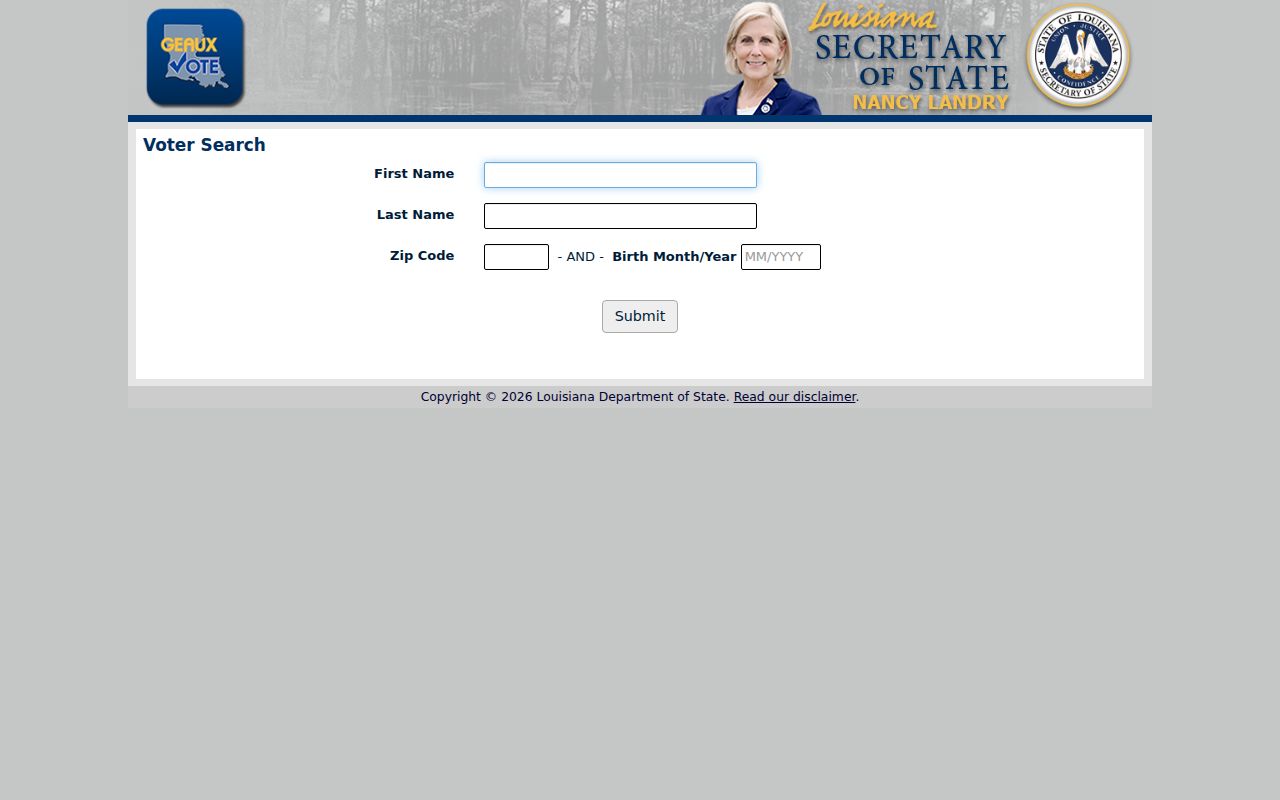
The required date and ZIP fields make this a confirmation tool. It is not a way to scan all Houma residents by surname.
Clerk Indexes Behind the Login
The Terrebonne Parish Clerk's Cott system keeps land and court indexes behind an account. Its public certified-date table shows why scope matters before you subscribe: conveyance indexes begin online in 1971, civil in 1990, criminal in 1994, marriages in 1935, successions in 1988, and wills in 1854. The broader Conveyance/Copy Department describes records reaching back to 1822. An online cutoff, in other words, is not the start of the record series at this records office.
Subscription tiers split land indexes, images, and civil or criminal dockets. The posted fee schedule listed thirty-day tiers from $50 to $100, a one-day image option where offered, $1 printing, and a $10 criminal minute entry on one tier. Fees can change. Before paying, call 985-868-5660, or ask whether a counter name search, mail request, or copy order fits the job better.
- Index
- A finding list that points to an underlying record.
- Parcel
- A mapped unit of land with its own assessment identifier.
- Situs address
- The physical location of property, which may differ from an owner's mail address.
- Certified copy
- An office-issued copy authenticated by the record custodian.
Current Directory Sources for Houma
Treat a modern Houma residents directory as a set of dated official rolls rather than one book. None covers everyone. Match each source to the role being checked, then inspect the record itself. A business filing can identify an officer or registered agent. A board roster can document a public appointment. Neither proves a home address.
| Official source | Name's role | Keeper | Access route |
|---|---|---|---|
| Property assessment | Assessed owner | Terrebonne Parish Assessor | Free web search and office |
| Voter registration | Registrant | Registrar of Voters | Identity or address lookup; list request rules |
| Recorded instruments | Grantor, grantee, or other party | Clerk of Court | Subscription index, counter, copy request |
| Court records | Named case party | 32nd JDC or Houma City Court | Clerk assistance and available web route |
| Boards and commissions | Dated civic appointee | TPCG | Public roster and meeting records |
| Business filings | Officer or registered agent | Louisiana Secretary of State | Commercial Search |
A careful Houma resident lookup checks two matching details before treating any records as belonging to the same person.
Houma Court and Vital Trails
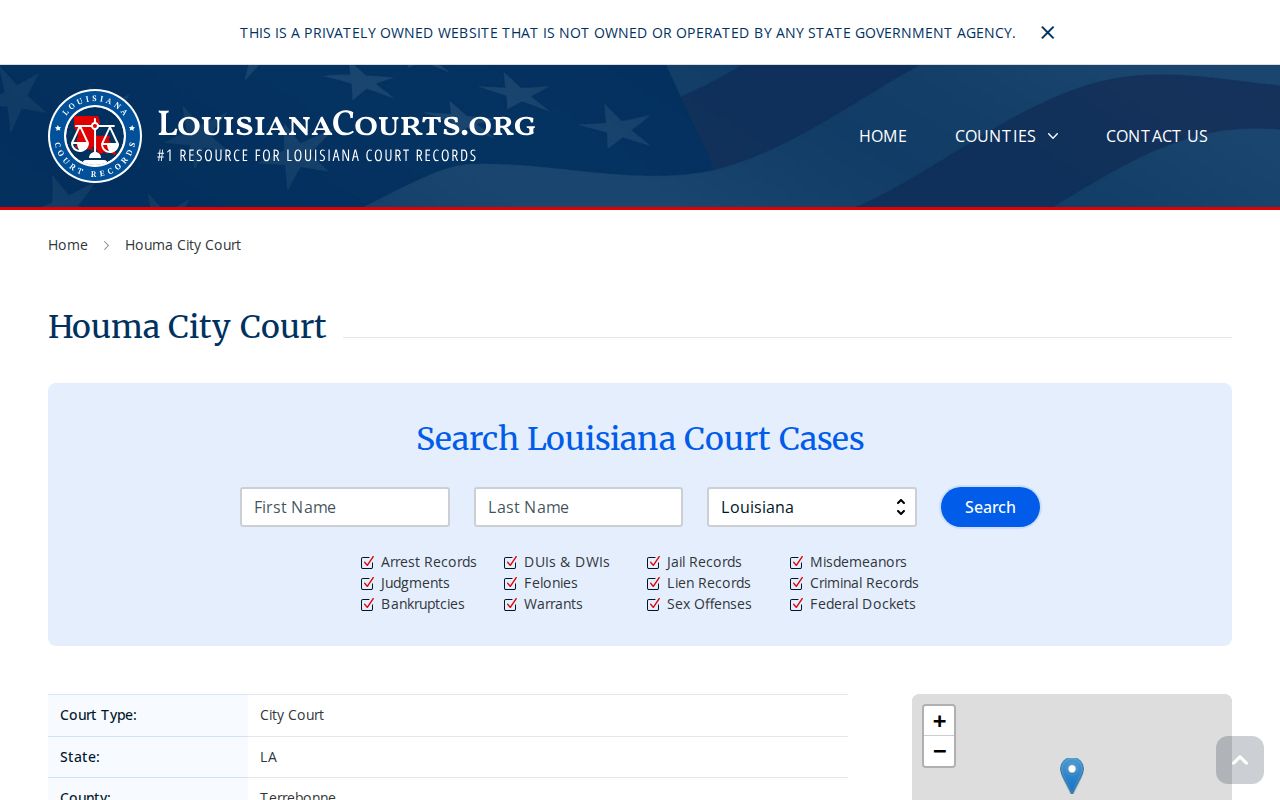
The 32nd Judicial District Court and Houma City Court serve different case paths. The Clerk indexes civil suits and offers paid name searches, while the Houma City Court route provides a public search path and clerk contact. A docket is a dated list of activity in one case. It may show a person as a party, a lawyer, or another role entirely. Keep the case number and filing date with the name. The court search screen helps establish the correct local forum for your records.
Court material is one trail. Vital records run on different rules. The local Clerk issues eligible birth certificates for $34, or a certificate-and-card package for $48. Qualifying deaths from July 7, 2012 forward cost $26. The counter takes cash only, requires identification, and limits copies by relationship or law. Births stay confidential for 100 years and deaths for 50 under La. R.S. 40:41. Older eligible indexes route to the Louisiana State Archives. The local vital-record page shows the Houma access route.
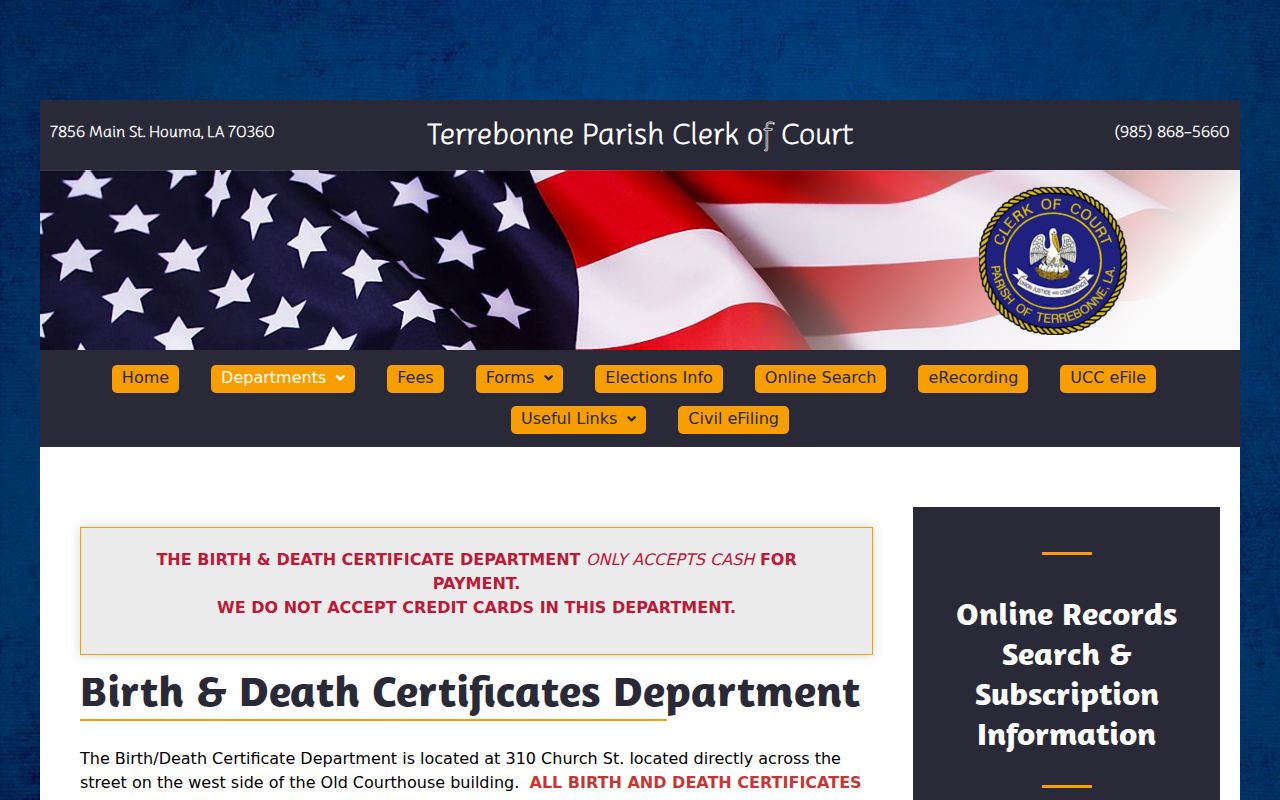
Check eligibility, ID, and record age before any counter trip.
Louisiana's Confidential Reunion Route
Sealed adoption files are not a back door. Nor do they expose a protected Houma address. Instead, Louisiana runs an official voluntary reunion process. The DCFS Adoption Reunion Voluntary Registry lets eligible adoptees and relatives seek contact by confidential mutual consent. The record stays sealed. That balance gives relatives a lawful route while shielding the person listed. Other protected addresses deserve the same restraint. Louisiana's Address Confidentiality Program substitutes a public mailing address for eligible participants, and voter and vital-record restrictions close other sensitive fields. Never combine partial public records to identify a protected person.
Lawful personal use. Houma records may support genealogy, heir research, civic review, or scam checks. Never use an address or identity detail to stalk, harass, or harm anyone.
Public Requests Fill Houma Gaps
TPCG posts no public name search covering every permit, nuisance file, occupational license, or department record, and online silence never proves a record is missing. The fallback is the custodian. Louisiana R.S. 44:31 lets any adult inspect or copy public records, with no Terrebonne residency requirement. R.S. 44:32 sets custodian duties. A strong request names the department, exact record series, date span, address or parcel number, and preferred electronic format. The local custodian is Robbie Lee at Government Tower, Suite 705, reachable at publicinfo@tpcg.org or 985-873-6403. Posted fees include free email delivery. Paper copies run $0.25 per page. Certain reports or media carry separate listed charges. Production timing depends on whether a record is ready or active, so avoid promising a fixed delivery date. The TPCG request page lists intake and fees.

The route matters most when the online trail dead-ends. It also fills gaps left by records held only inside a single department.
Older Houma Directory Shelves
The Terrebonne Parish Library anchors historical Houma directory work. Its stated Houma directory run starts in 1897 and reaches the present. Staff can confirm each annual title. Identified volumes include the Directory of the Parish of Terrebonne, 1897, published by Rogers Parish Directory Co. of New Orleans, and a 1938 to 1939 Houma volume from State Directory Company. The early book spans the whole parish. It lists civic officers, trades, streets, plantations, and rural sections. The Main Branch keeps all this in a second-floor genealogy room, alongside local yearbooks, newspaper microfilm, Sanborn maps, and church material. Terrebonne census extracts cover 1840 through 1910 except 1890, and obituary indexes for Terrebonne and Lafourche newspapers run from 1885 through 2007. Ask staff for a title, year, name, and page image. OCR can fail on old print. The 1897 scan, for instance, reads "Parish" as "Darish." The library genealogy page lists the Houma collections.

Old shelves add dated household context a parcel search cannot.
Houma Addresses Changed With Time
Modern address systems can hide older Houma residents. TPCG's 2004 budget recorded a master address database with 55,125 digitized structure addresses tied to GIS and E911. Street renaming goes back further. Work in 2001 tackled duplicate names and sent changes to USPS and emergency agencies. Billy Street became Hazel Boykin Street in April 2025. Council records from 2026 show another named-place update at the Thompson Road bridge crossing Bayou Chauvin. When an old search stalls, keep both street names. Also record the change date, legal description, and parcel number. Louisiana R.S. 18:201 requires certified reporting around street-name or number changes to the Registrar of Voters. That trail bridges history to a modern address. Never treat postal label and city limit as one. Note: A mailing address, voter address, postal city, and physical parcel are distinct fields, and none alone identifies a complete Houma household.
Record Every Houma Match
Write down every match. A good worksheet notes the source URL, access date, record type, and exact spelling. It also records the person's role in the record. It captures the address label, parcel or case number, and tax year. Filing date and any access limits belong on the sheet too. Call an index an index. Save the original page when you can. When two sources disagree, keep both dates rather than forcing one answer.
An official roll and a commercial people-finder result are not the same thing. Official indexes identify their custodian, purpose, and date, and they point toward the underlying record. A commercial result may blend old addresses or people with similar names. It may never explain how a match was formed. Start with official Houma residents directory sources. Then confirm any outside claim with the office that holds the record.
A shared name is not enough. Anchor it twice. For a parcel, pair the name with a parcel number or legal description. A deed date, or book and page, works just as well. A court result needs its case number, court, role, and filing date. For a historical entry, keep the directory year, printed page, street wording, occupation, spouse, or nearby business. Initials and spelling shifts appear constantly in old Houma material, and OCR adds fresh errors. Search the variants, but merge no one until the original records agree.
Check geography on its own. Terrebonne Parish records can name Houma, Bayou Cane, Chauvin, Dulac, Gray, Montegut, Schriever, Bourg, Cocodrie, or Gibson. A Houma postal label does not settle the city boundary. Preserve the locality exactly as printed, then turn to the parcel and GIS layers for modern context. That matters most along bayou roads and near annexation lines. There, postal, ward, city, and service labels can all differ.
Last, separate free finding aids from certified records. The Assessor, GIS, voter confirmation, the library catalog, and some state searches open without a fee. Clerk images, staff name searches, certified copies, and certain reports may cost money. Log what you searched even when it returned nothing. A dated negative result with a stated coverage range beats an undocumented claim that no record exists.
| Keep with the result | Why it matters |
|---|---|
| Name and role | Separates owner, voter, officer, and case party |
| Source and date | Shows when the claim was true or observed |
| Parcel, book/page, or case number | Points back to the underlying record |
| Address type | Prevents mailing and physical addresses from being merged |
| Confidence note | Records what supports a same-person match |